
Technical
Developed for experienced technical and engineering personnel working with valves and related products.

Business Management
Covering marketing & management topics specific to the valve industry to help those in various business roles contribute to a successful company.

Manufacturing Ops & Repair
Ideal for those who work or supervise the production and assembly process in their company or work in valve repair.
Opening General Session— Straight Talk: Leadership Perspectives on the Forces Reshaping Our Industry
This leadership panel brings together voices from across the valve industry value chain — an end user, a manufacturer, and a distributor — to discuss the forces reshaping the North American industrial valve sector. From tariffs and geopolitical risk to workforce transitions and standards & compliance, the conversation will be candid, practical, and grounded in what industry leaders are actually navigating today. AI’s role in manufacturing and business operations will also be examined with a critical eye.
Panelists include:
Scott Jackson, CEO, FloWorks
Rob Velan, Executive Vice President, International Operations, Velan
Moderated by: Heather Rhoderick, President, VMA


Open to Valve Basics Seminar attendees.
End-Use Market Trends & Outlook: Water & Wastewater (Sales & Business Management)
HEIGH HO, IT’S (STILL) OFF TO WORK WE GO— The water and wastewater market has been relishing a multi-year run of double-digit growth propelled by a massive infusion of federal investment from the American Rescue Plan Act (ARPA), the Infrastructure Investment and Jobs Act (IIJA), and other programs. In Disney’s iconic animated feature film Snow White and the Seven Dwarfs, the little men memorably sang “It ain’t no trick to get rich quick” as they merrily went to work. A similar refrain was heard around companies in the water and wastewater field as they delivered highly successful business results.
But what now?? With the flow of dollars from DC either already ended or sunsetting, does the market still hold attractive promise and potential? We will examine how such forces and factors as the big picture economy, government policy and regulation, water availability, technology advancements, workforce issues and other trends will make an impact going forward and will offer a glimpse of what the future may hold for a market of significant importance to the valve industry.
Presented by: Tom Decker, Owner, Thomas E. Decker Consulting

Retired from corporate life, Tom Decker now heads up Thomas E. Decker Consulting, LLC and provides market strategy and business management expertise to water and wastewater sector companies, organizations, and utilities. Prior to founding his consulting firm Tom worked in leadership positions for Brown and Caldwell, CH2M HILL, Parsons Corporation; and as partner and director of marketing for the Infrastructure Business of Black & Veatch. During his engagement in the water and wastewater field, he has led worldwide and national business development operations; directed numerous growth initiatives including geographic expansions as well as mergers and acquisitions; facilitated planning efforts for water and wastewater utilities; served as program manager for large capital improvement programs; and operated wastewater treatment plants.
Triple Offset Butterfly Valves for Waterworks (Technical)
The development of the new AWWA C5ZZ Triple Offset Valve Standard represents a significant advancement in defining performance expectations for high-integrity isolation valves used in water industry applications. Triple Offset Butterfly Valves (TOVs) have historically been referenced within the AWWA C519 High-Performance Butterfly Valve Standard; however, during the most recent C519 revision cycle, it became clear that TOVs differ fundamentally from the single-offset and double-offset butterfly valves traditionally covered under C519. These differences extend beyond geometry and sealing mechanics to include materials of construction, pressure class capabilities, and applicable testing requirements.
Unlike single- and double-offset valves, which may be manufactured from ductile iron per the current C519 provisions, Triple Offset Valves require metallic construction—typically carbon steel, stainless steel, or cast steel—to achieve the high-temperature, high-pressure, and zero-leakage performance expected of this design. Their pressure ratings exceed the limits of existing AWWA valve standards, necessitating alignment with the more rigorous pressure classes and qualification testing defined in API 598, the industry standard governing Triple Offset Valves.
The proposed AWWA C5ZZ standard will establish a dedicated framework for TOV design, materials, performance criteria, and testing requirements, ensuring that these valves are specified and evaluated according to their unique characteristics rather than being adapted into standards intended for lower-pressure, ductile-iron-based butterfly valve designs. This new standard will provide clarity for manufacturers, utilities, and engineers while supporting the broader adoption of Triple Offset Valve technology in water system applications.
Presented by: Steve Carpenter, BK Valves & Equipment
 Steve Carpenter is a water-industry professional with more than 40 years of experience spanning municipal utilities, inspection services, and manufacturing. His career has been defined by hands-on technical expertise, leadership in standards development, and a deep commitment to improving the reliability and performance of critical water infrastructure. Steve’s industry background includes key roles with San Diego County Water Authority, Wachs Water Service/Pure Technologies and B&K Valves & Equipment, where he spent the past six years supporting valve technologies, field services, and system performance solutions for utilities across the region. A recognized leader within the American Water Works Association (AWWA), Steve has contributed extensively to the development of industry standards. He serves as a member of multiple AWWA standards committees and has held several chair positions, including:
• C519 High-Performance Butterfly Valves
• C5ZZ Triple Offset Butterfly Valves
• M67 Manual of Practice – Electric Actuators
Through decades of field experience and standards leadership, Steve continues to help shape best practices that support safe, efficient, and resilient water systems.
Advanced Coating Solutions for Severe Service Applications (Manufacturing Ops, Repair & Reliability)
This presentation examines advanced coating technologies for extending component life and improving performance in severe service applications across petrochemical, chemical processing, power generation, and mining industries. High-Velocity Oxygen Fuel (HVOF) thermal spray coatings apply hard materials—including metallic alloys (nickel, cobalt, titanium), carbides (tungsten carbide, chromium carbide), and composite materials—onto substrates at high velocities, creating dense, wear-resistant protective layers. Ceramic coatings such as chromium oxide (Cr₂O₃) and titanium dioxide (TiO₂) offer exceptional wear and corrosion resistance for valve components, with chromium oxide providing superior performance in acidic and alkaline environments at elevated temperatures, while titanium dioxide delivers biocompatible, chemically inert protection for specialized applications. Bond coatings including tantalum and Hastelloy serve as critical intermediate layers, ensuring strong adhesion and enhanced corrosion resistance in highly aggressive chemical environments. The presentation also addresses traditional hard chrome plating methods, comparing their benefits and limitations against modern HVOF alternatives, particularly regarding environmental considerations and performance in thermal cycling conditions.
Components operating in severe service environments face extreme challenges including abrasive wear, erosion, corrosion, thermal degradation, and high mechanical stress. These advanced coating solutions address these challenges through exceptional wear resistance, corrosion protection, and high-temperature performance. Through repair case studies demonstrating restoration of damaged valve components, the presentation illustrates how these coating technologies extend asset life as cost-effective alternatives to replacement, minimizing downtime and operational costs while maximizing equipment reliability in challenging industrial environments.
Presented by: Kelly Songer, Director of Valve Services, Precision Spray & Coatings

Kelly is a 3rd generation industrial manufacturer with 20 years of experience. In 2016 she was featured in a cover story as a ‘Legacy Leader’ by the National Association of Manufacturers, and in 2017 she was honored with the ‘Service Award’ by the Valve Manufacturers Association of America.
End-Use Market Trends & Outlook: Oil & Gas (Sales & Business Management)
A description of the forces shaping the oil and gas valve industry landscape in 2026 and beyond — from macroeconomic trends to the outlook for activity and supply chain dynamics
Presented by: John Spears, President, Spears and Associates Inc.
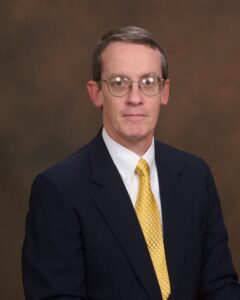
John Spears, President of Spears and Associates, has over 45 years of experience conducting market research on products and services used in the drilling, completion, production and pipeline sectors of the global petroleum industry for clients including oilfield service firms, operators, and financial institutions. He is the director of the firm’s forecasting activities, author of the Drilling and Production Outlook and several of the firm’s market segment reports
Enhancing Control Valve Reliability and Process Efficiency with Self-Optimizing Digital Positioners (Manufacturing Ops, Repair & Reliability)
To optimize and extend the runtime of control valves the most common method is a robust and consistent maintenance program that includes inspection, cleaning, lubrication, replacing worn components like diaphragms, packing seals and verifying the positioner functionality. Digital positioners open possibilities for process optimization and increasing control valve longevity. This can be achieved by monitoring valve performance through diagnostics and by adjusting control parameters. But this immediately pushes the user to think: Do I need additional software, or can the positioner do something on its own? How do I collect data, understand and analyze valve movement in real time? Do I need to train my personnel? This presentation intends to answer these questions with a focus on digital positioner technology that can provide real-time optimization and discuss how to realize it.
Presented by: Neil Shah, Global OEM Account Manager, ABB; Naas DeJager, Global Product Manager Actuators & Positioners, ABB

 Naas DeJager is the Global Product Manager for Valve Automation Products with ABB Inc. based out of Charlotte North Carolina. Naas has more than 35 years of experience in Industrial Process Automation in various roles including Application Engineering, Project Management and Product Management. He has been with ABB in the USA for the last 24 years in the Process Automation Division.
Valve Testing (Technical)
Stop Selling Like Everyone Else: The Industrial Buyer Doesn't Need Another Quote (Sales & Business Management)
Industrial buyers don’t need another quote – they need a better conversation
But most reps respond too quickly, rely on technical knowledge, and fall into the price-driven traps – just like their competition. In this practical, fast-paced session, we’ll break the buyer-seller dance that keeps even experienced reps stuck in reactive selling. You’ll learn how to slow the process, uncover what’s really driving the decision, and establish equal business stature with buyers who prefer to control the conversation. Using frameworks like KARE and BAT, you’ll learn how to be more strategic and intentional. You’ll learn how to take control without being pushy and why qualifying hard makes closing easy.
Presented by: Robin Green, President, Ascend Performance, Inc., powered by Sandler

Robin Green is the President and Owner of Ascend Performance, Inc., an award-winning Sandler Performance Center in Richmond, VA. He works with industrial sales companies throughout the United States to simplify their sales processes, strengthen team performance, and implement reliable, repeatable systems across sales, leadership, and customer engagement. Drawing on a decade of working with technical sellers, engineers, and industrial distributors, Robin helps organizations break out of reactive, price-driven selling. His clients include pump and flow-control companies and engineered product firms, many of whom have doubled their sales growth or transformed their sales culture through his programs.
Advanced Reactors and Market Trends with Nuclear New Construction (Technical)
Description coming soon.
Presented by: Kurt Christianson, Manager, Business Development, Curtiss-Wright

Kurt Christianson, PE, has worked in fossil power, oil, and gas delivering valve solutions for critical applications for over 25 years. Since 2005, Kurt has worked in nuclear power exclusively, delivering engineered solutions to address obsolescence, plant life extensions, and new construction. In 2021, Kurt began supporting advanced reactors across multiple platforms as a Program Manager at Curtiss-Wright Nuclear.
Measuring Reliability in Industrial Valve and Automation Products: Tools, Techniques, and Trends (Manufacturing Ops, Repair & Reliability)
Studies in CFD and FEA Analysis for Valve Applications (Technical)
Validating computational mechanics models is essential to ensure the accuracy and reliability of simulations. This presentation will describe how to calibrate the numerical model with test data and scale it to other sizes and material combinations. The first case study evaluates a valve’s flow capacity by comparing lab test results with CFD, examining correlations, scalability considerations to different valve sizes, and potential simplifications. The second case study focuses on the thermal analysis of valves in high-temperature and cryogenic applications. This presentation will share a novel and reliable technique for constructing a robust computational model. The method offers a clear understanding of the model’s limitations while ensuring accurate results.
Presented by: Jonathon Marta, Engineering Manager, Bray International, Inc.

Jonathon studied mechanical engineering at the University of Houston and has added great value to Bray over the past 10 years. Starting as a design engineer on the High-Performance Butterfly Valve (HPBV) sustaining engineering and rapid response team, Jonathon quickly turned into a finite element analysis and computational fluid dynamics expert. Further, Jonathon helped lead the development of Bray’s U.S. Navy qualified HPBV product line. Later, Jonathon was the Program Manager for Bray’s core product line expansion into the European chemical market. Today, Jonathon leads a team of engineers for Bray’s triple-offset butterfly valve, Tri Lok™.
Building the Talent Pipeline: A Case Study in Partnering with a Local Technical School (Manufacturing Ops, Repair & Reliability)
The Growing Trend of Gas-Charged Hydraulic Actuators in Nuclear Valve Applications
A growing trend in the nuclear industry is the adoption of gas-charged hydraulic actuators as a next-generation solution for valve control, driven by their superior performance and reliability compared to traditional metallic coil-spring designs. These actuators deliver significantly higher thrust and torque output while minimizing weight and space claim—an essential benefit for containment-constrained environments. Fully self-contained and requiring only electrical power, they eliminate the need for plant pressure supply, enabling simplified installation and true “plug-and-play” functionality.
Nuclear-qualified and designed for up to 60 years of service life, these actuators feature integral nitrogen storage for fail-safe operation, rapid stroke times, and variable speed control. Currently deployed on linear Main Steam Isolation Valves (MSIVs) and Feedwater Isolation Valves (FIVs), development is underway to extend their use to ball valve applications. Their growing adoption reflects a broader trend in the nuclear market toward compact, high-performance, and maintenance-efficient actuation solutions.
 Presented by: Brianna McKee, Product Manager, Trillium
Brianna McKee serves as the Product Manager for the Hiller brand at Trillium Flow Technologies, where she leads nuclear equipment qualification initiatives and drives the growth and modernization of Hiller’s valve actuator product line. Brianna holds a Bachelor of Science degree in Mechanical Engineering from the University of Pittsburgh. She began her career in the nuclear industry in 2022 as a design engineer, quickly developing a strong foundation in safety-related actuation systems. Her expertise led her into an R&D engineering role focused on advancing and expanding the Hiller product portfolio. Now, with a year of product management experience, Brianna bridges engineering, qualification, and customer needs to ensure Hiller’s actuators meet the demanding requirements of nuclear applications. Her work centers on innovation, reliability, and lifecycle performance – all critical to the future of safety-related actuation technology.
PFAS Policy Landscape: Impacts, Advocacy & What’s Next (Sales & Business)
Sealing the Future: PFAS-Free Graphite Solutions for Valves and Fittings (Technical)
This session explores the latest advancements in PFAS-free graphite sealing technologies designed to meet the industry’s growing demand for low-emission, high-performance solutions. Attendees will learn how a new portfolio of materials – including LL foil, carbon and graphite textile yarns, foil yarns, and oxidation-resistant yarns – enables significant reductions in fugitive emissions while maintaining exceptional thermal, chemical, and mechanical stability. Through case examples and performance insights, the presentation highlights how these innovations enhance valve reliability, extend service life, and support sustainable, regulation-compliant operation.
Presented by: Gerard Sanchez, Director of Sales, Americas, SGL Carbon; Wesley Johnson, Senior Technical Sales Manager, SGL Carbon
 Gerard is an industrial executive in the sealing and valve industry with deep expertise in flexible graphite materials and high-performance sealing solutions. He currently serves as Director of Sales for the Expanded Graphite business line at SGL Carbon, where he has held progressive sales and product management roles since 2018, supporting global OEMs and industrial customers in demanding, performance-critical applications. He holds a Master’s degree in Chemical Engineering and a Master’s degree in Industrial Engineering. Prior to SGL Carbon, he worked at BASF, the world’s largest chemical company, gaining foundational experience in large-scale industrial manufacturing and materials science.
 Wesley Johnson is a Senior Technical Sales Manager with SGL Carbon specializing in expanded graphite solutions and is based in Broussard, Louisiana. He brings more than 15 years of prior technical, management, and sales experience in the Oil & Gas and Renewable Energy industries and holds a Bachelor of Science in Mechanical Engineering from the University of Louisiana at Lafayette. Throughout his career, Wesley has utilized his experience to combine technical knowledge to advance projects thru engineering, commercial, and supply chain solutions working closely with customers. Wesley collaborates cross‑functionally with production, R&D, and leadership teams to align customer needs with innovative, high‑performance material solutions.
Enhancing Pneumatic Actuator and Valve Reliability through Direct Torque Measurements using IOT (Manufacturing Ops, Repair & Reliability)
Augmented Reality + Virtual Reality (Technical)
Presented by: Paul Ryznar, Founder & CEO, LightGuide

Government Affairs Update: Insights & Impacts (Sales & Business Management)
The start of the second Trump administration began with a flurry of Executive Orders, and has not slowed down. With policy shifts on tariffs, taxes and many regulatory areas, there is a lot for companies to digest. This session will provide a review of federal activities to date and will also look forward on what could be forthcoming. We’ll also discuss the interplay between all three branches of government and the states to help explain the landscape and issues to be watching– from PFAS to energy and others– for our industry.
Presented by: Omar Nashashibi, Owner, Inside Beltway

Omar Nashashibi is a lobbyist and consultant in Washington, D.C. with more than two decades working with politicians and policymakers on behalf of the manufacturing industry. Omar has represented clients before the previous and current administrations, the U.S. Congress, particularly the House Ways and Means and Senate Finance, Appropriations, and Transportation Committees. He has also consulted clients on matters in several state and local governments, including the District of Columbia, Virginia, and Illinois, among others. Prior to entering the private sector, Mr. Nashashibi worked for the Office of Management and Budget, focusing on federal procurement policy. He also has extensive experience working with non-profits and public policy foundations. He served as a research assistant at the Institute for Public Accuracy, a nation-wide consortium of public policy researchers and analysts. In 1995, he began his career in Washington, D.C. covering congressional hearings and agency proceedings for a nation-wide nonprofit publication. Omar graduated from the George Washington University in Washington, D.C., where he studied Political Science and International Affairs.
AWWA + API Standards Update (Technical)
AWWA standards and manuals provide consensus-based, ANSI-approved guidance defining minimum requirements for the design, performance, installation, and manufacture of waterworks products—without functioning as proprietary specifications or endorsements. By establishing shared best practices, these standards enhance safety, reliability, interoperability, and procurement consistency. This presentation explains how standards are developed and maintained through balanced stakeholder committees, formal balloting, and a structured appeals process. The session highlights valve-related AWWA standards and emerging resources, offering practical guidance for manufacturers. Attendees will learn how to identify the appropriate documents, understand scope and limitations, integrate standards into product technical sheets, and anticipate future developments.
Most of the most common fugitive emission and fire test standards from ISO and API have or will be having changes coming soon. This presentation will provide an update to these changes. The similarities and differences between the seemingly similar standards will be explored. A few recently released new standards will also be introduced.
Presented by: Amanda Dail, Standards Engineer, American Water Works Association; Matt Wasielewski, Chief Technical Officer, Yarmouth Research
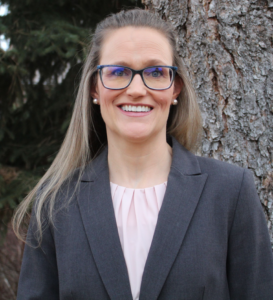 Amanda Dail is a Standards Engineer with the American Water Works Association (AWWA), where she supports over a dozen committees and oversees more than 35 standards and manuals of practice, including those for valves, fire hydrants, backflow preventers, slide gates, and coatings. She leads complex standards development efforts and builds consensus among diverse technical stakeholders. With more than 20 years of engineering experience working with standards, including 18 years in testing, inspection, and certification, Amanda is known for her expertise in product performance evaluation, standards interpretation, and crossindustry collaboration. She holds a B.S. in Chemical Engineering from North Carolina State University.
 Matt Wasielewski started his career as a Design Engineer at a major valve manufacturer. With the release of the Clean Air Act Amendments, Matt founded Yarmouth Research and Technology in 1992 and has grown it to be the leader in providing quality independent testing services for valves, gaskets and packing in the areas of fugitive emission, fire, cryogenic, design verification (TAT), high pressure-offshore, and other tests. He has been an active participant of the Fluid Sealing Association (FSA), ASME, MSS and API, being a member of the API 589, 6A, 6D, 6Y, 607, 6FA, 6FB, 622, 624 and 641 test standard committees. Matt is also part of the USA delegate team to ISO, contributing to ISO test standards on valves. He has presented numerous papers on fugitive emissions and fire testing at Valve World, API and Valve Manufacturers Association conferences in the United States, Europe and Asia.
LDAR Technology (Technical + Manufacturing Ops, Repair & Reliability)
ISO + MSS + ASME Standards Updates (Technical)
This presentation will provide an update to U.S. industry standards organizations as well as international (ISO) standards, and their corresponding published valve standards. Three industry organizations will be covered including ISO, ASME, and MSS. Important revisions to current and new standards covering valves, flanges, piping components, and quality procedures will be discussed.
Presented by: Carlos Davila, Product Manager, Crane ChemPharma & Energy; Ron Merrick, Fluor (Retired)
 Carlos Davila is a registered professional engineer, PE, and a graduate of the University of Houston with a Bachelor of Science in Mechanical Engineering. With over 55 years of experience in the valve industry, his background includes design, development, application and production of valves. Currently he is Product Manager-Americas, for Crane ChemPharma & Energy. He is an active voting member of the API Refining and Equipment Standards Manufacturers Subcommittee on Piping and valves for 44 years. Chair of ASME B16 Standards Committee, member of B16 Subcommittee C, Subcommittee N, and the USTAG. Chair of Sub-Group A in ASME B31.3 Standards Committee addressing Process Piping. Current member of the MSS Board of Directors and chair of Technical Committees on Quality Standards, Diaphragm Valves and Steel Flanges. He is active in ISO standard activities
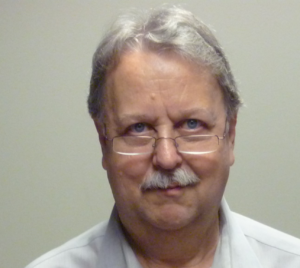 Ron Merrick is recently retired after a forty-five year career in specifying valves and other piping materials. He retired as a Senior Fellow and Director of Piping Material Engineering at Fluor Enterprises in Sugar Land, Texas, supporting the worldwide piping description and specification catalog. He was a piping materials engineer for Fluor from 1975 until 2020, in Houston and Saudi Arabia, working on plants covering markets as diverse as hydrocarbons, basic and specialty chemicals, power, and gas processing. He was also Fluor’s engineering specialist in piping shop fabrication. Ron is the author of several articles on valve selection, and of the book Valve Selection and Specification Guide. He has a BS in Mechanical Engineering from Wichita State University, and is a registered professional engineer in Texas and other states. He is the past president of the PVF Roundtable, an organization devoted to the Pipe, Valve and Fitting industry. Other professional involvement includes membership in the API Refining Division, as past chairman of the Subcommittee on Piping and Valves Manufacturers & Contractors subcommittee, contributing to MSS valve committees, and as the US delegate to ISO TC 153 “Valves”.
Smart Valves, Smarter Decisions: AI-Driven Diagnostics and Automation with A-PRIME (Technical + Manufacturing Ops, Repair & Reliability)
This session introduces A‑PRIME—Align, Probe, Reveal, Iterate, Measure, Expand—a practical, continuous operating loop that turns valve diagnostics into auditable decisions and closed‑loop learning. Attendees will see how telemetry, shop tests, and field evidence are fused into explainable alerts; how risk is triaged with human‑in‑the‑loop governance; and how automation is applied only where it improves reliability, speed, and accountability. We’ll contrast A‑PRIME with linear improvement methods, show why pilot‑first validation prevents over‑automation, and outline a cost‑aware adoption pattern—from a minimal CRM backbone to optional analytics—so teams can start small, learn fast, and scale safely as trust grows.
Presented by: Anup Zachariah, Global CRM Project Manager, Crane ChemPharma & Energy
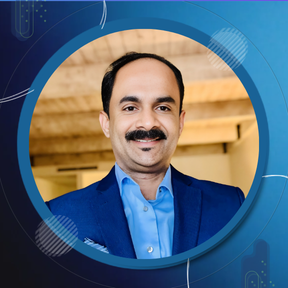 Anup Zachariah, PMP and Salesforce Certified Agentforce Specialist, is a Global CRM Project Manager and Operational Excellence leader in regulated, operations‑intensive manufacturing environments. He improves customer experience by strengthening the systems behind it—governed digital workflows, clear ownership, and quality discipline that make frontline execution faster, more consistent, and audit‑ready. With 20+ years leading global CRM programs and transformation efforts, he translates customer and frontline needs into practical, compliant requirements and repeatable delivery—reducing friction across sales and service while improving reliability of outcomes.